Tuesday, December 19, 2017
St. Francis - In Giving, We Receive
St. Francis of Assisi reminds us that In Giving, We Receive. That phrase may seem at first glance a total contradiction, but some of my sweetest memories involve my receiving as a result of my giving. I remember one of my mentors told me the summer before I started teaching that there were only two things I needed to know to be a successful teacher: “You have to love your subject, and you have to love your students.” In short, you have to be passionate about what you teach and whom you teach. Teaching is a relational affair among teacher, student, and subject matter. You give a great deal of yourself, of course – your knowledge, your expertise, and your care. But no matter how much I have given, I have received even more – trust and gratitude from my students, a deepened understanding of both the literature I have taught and the students I have mentored, and something I didn’t originally anticipate - a deeper understanding of myself. Teaching has been a profound gift that has enriched me in every way possible – and given me gifts beyond measure.

Wednesday, December 6, 2017
Benedict - Serious Faults
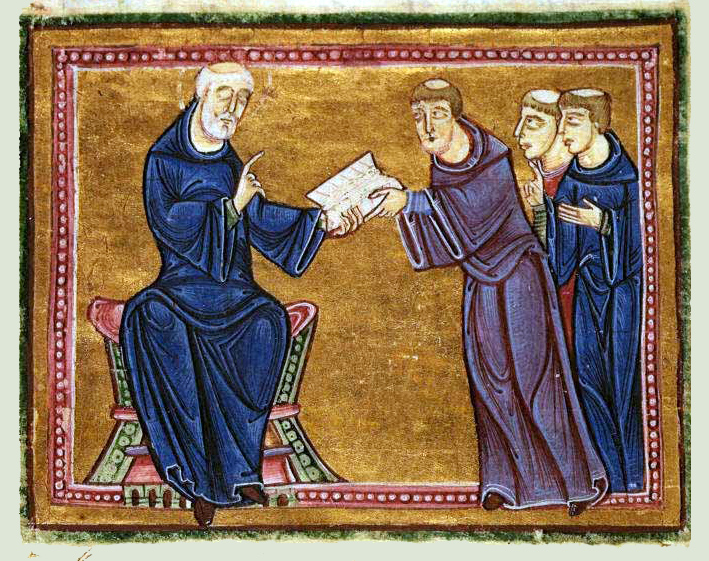
In The Rule of Benedict, when Benedict discusses serious faults and subsequent excommunication from the community (in this case, the monastic community), he reminds us that we all make mistakes and transgress against our communities and, consequently, often need time “to decide if being out of the community is really what [we] want, really what [we] need, really what will bring [us] happiness “ Time for reflection and self- examination can give us the opportunity to explore with focus and conscientiousness what we need in order to lead us back in the community with renewed commitment and vigor. Hence, the value of sabbaticals or long vacations or discernment retreats. As Sister Joan Chittister says in her commentary on the rule, “a human being needs help to be a human being.” We need one another in community.
Thursday, November 30, 2017
Navajo Nation

It is easy to feel that sacredness when walking through the mesas and arroyos, the canyons and peaks, gazing upon the multi-colored sandstone. As we notice the petroglyphs on those sandstone walls, we realize through those primitive pieces of art and records of a culture just how long we humans have been on this earth. The humans who carved the petroglyphs on those walls are our ancestors and family, and the landscape is our precious legacy.
Thursday, November 23, 2017
Love and Power

Some people
think that hate is the opposite of love. Some would argue, however, that power
is love’s opposite. To lord power over another is to deny him his emotional
freedom and to enslave him. Love is about setting someone free, honoring his
individuality, and giving him room to grow into his own.
The connection that
occurs in a loving relationship results in expansiveness. We become our best
selves through loving and being loved. Someone else’s power over us diminishes
us. Truly loving relationships improve our emotional health as well as our
cognitive health: we become more present, more alert, more aware of not only
the beloved but also ourselves. Love is, in short, a powerful path to
self-knowledge.
Subscribe to:
Posts (Atom)